Choosing the right cooling aggregate can make or break the success of your project. With so many options available, it can be challenging to identify which one will best meet your needs. In this blog post, we'll guide you through everything you need to know about selecting the ideal cooling aggregate, focusing on factors like extruded profiles, material choice, and design considerations.
Table of content:
Factors to Consider When Selecting Cooling Aggregates for Industrial Use
Comparing Different Types of Cooling Aggregates for Optimal Performance
The Importance of Material and Design in Cooling Aggregate Selection
How Custom Extruded Profiles Enhance Cooling Aggregate Performance
Factors to Consider When Selecting Cooling Aggregates for Industrial Use
When embarking on any industrial project involving cooling aggregates, it's important to evaluate specific factors that can impact performance. First, assess the cooling capacity required for your application. The cooling aggregate should efficiently dissipate heat while maintaining optimal operating temperatures. Consider the size and geometry of the aggregate, making sure it fits seamlessly within your system.Next, examine the environmental conditions your cooling aggregate will face. Harsh conditions may necessitate robust materials and coatings to resist corrosion and wear. Finally, evaluate the compatibility of the cooling aggregate with your existing components, ensuring it integrates smoothly without causing disruptions.
Comparing Different Types of Cooling Aggregates for Optimal Performance
Cooling aggregates come in various forms, each offering distinct advantages. For instance, a forced convection cooling method is ideal for applications requiring rapid heat dissipation. This method typically involves using an extruded profile with a fan to enhance airflow and improve thermal performance.Comparing different types of cooling aggregates, such as pin fin heatsinks and stacked fin heatsinks, can help you determine which option aligns with your project's goals. Each type has unique characteristics, offering varying levels of heat dissipation, material strength, and cost-effectiveness. Pin fin heatsinks often provide excellent thermal performance in compact spaces, while stacked fin heatsinks deliver superior cooling for larger applications.
The Importance of Material and Design in Cooling Aggregate Selection
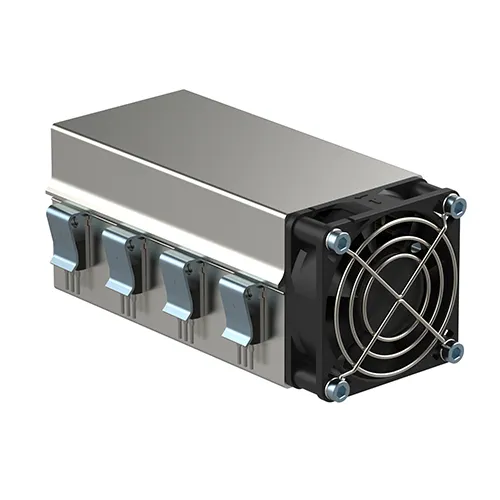
Material selection plays a crucial role in the efficiency and longevity of cooling aggregates. Common choices include aluminum and copper due to their excellent thermal conductivity and lightweight properties. For example, the RX580-063-19 model mentioned in the Renxin Precision website utilizes AL6063-T5 aluminum material for its extruded profiles, ensuring optimal heat dissipation and durability.Design is equally important, as it influences the aggregate's performance. Features like grooves for lock-in retaining springs facilitate efficient heat transfer and secure attachment to other components. Additionally, the inclusion of miniature DC fan motors can significantly enhance air movement across the cooling surface, reducing temperature fluctuations.
How Custom Extruded Profiles Enhance Cooling Aggregate Performance
Custom extruded profiles offer a tailored solution for specific cooling requirements. These profiles can be designed to meet your project's unique needs, delivering enhanced performance and efficiency. For instance, the RX580-063-19 cooling aggregate features a compact design and homogeneous heat dissipation, making it suitable for various industrial applications.Extruded profiles allow for easy integration with existing systems, ensuring a seamless fit. Additionally, they can be customized in terms of length, design, and processing to accommodate specific project requirements. The flexibility offered by custom extruded profiles enables businesses to optimize their cooling solutions, resulting in improved thermal management and reduced operational costs.
In conclusion, selecting the right cooling aggregate is essential for achieving optimal performance in your project. By considering factors like cooling capacity, material choice, and design, you can find the perfect match for your needs. Custom extruded profiles further enhance the capabilities of cooling aggregates, providing tailored solutions that cater to specific applications. As you explore your options, keep these insights in mind to ensure the success of your project.By understanding the intricacies of cooling aggregates and their applications, you are better equipped to make informed decisions that will benefit your project in the long run. With proper research and attention to detail, you can unlock the full potential of your cooling solution, ensuring your systems operate efficiently and effectively.


