
Table of contents:
Key Steps in Producing a Reliable Customized Liquid Cold Plate for Industrial Use
How Custom Liquid Cold Plate Manufacturing Ensures Precise Cooling Channel Integration
Why Partnering with an Experienced Supplier Matters for Your Custom Liquid Cold Plate Projects
The manufacturing process of a customized liquid cold plate involves precise craftsmanship and advanced technology to ensure the highest performance. It begins with material selection, typically leveraging high-purity copper or aluminum depending on thermal conductivity requirements. The choice of materials plays a significant role in ensuring heat dissipation and durability. Next, CNC machining technology is utilized to carve out channels or pathways for liquid flow within the structure. These channels are meticulously designed to maximize heat transfer area while maintaining a compact and lightweight design. After machining, manufacturers focus on joining techniques like brazing or friction stir welding to assemble and seal the components. This ensures a leak-proof construction capable of withstanding long-term industrial use. Following assembly, rigorous tests are conducted to validate thermal performance and structural durability. Thermal resistance values, weight metrics, and surface finishes are among the parameters evaluated for quality assurance. Renxin Precision, for example, delivers cutting-edge products like the liquid cooling solutions for IGBT modules, showcasing its expertise in producing cold plates with optimized thermal resistance and lightweight benefits.
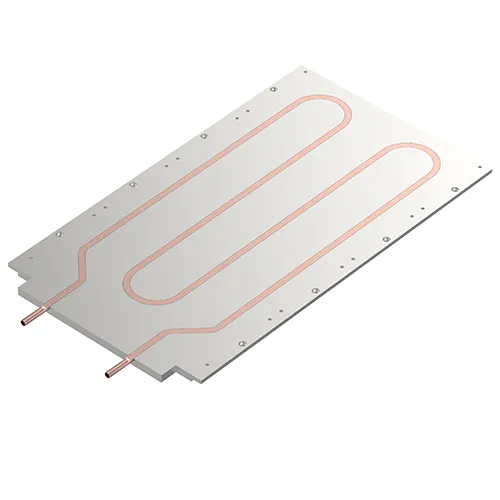
The precise integration of cooling channels within customized liquid cold plates is crucial for achieving optimal heat dissipation. This begins with detailed thermal simulations during the design phase. Using tools such as CFD (Computational Fluid Dynamics), engineers predict fluid dynamics to optimize the placement and geometry of channels based on specific industrial applications. CNC machining, a pivotal technology in this process, achieves highly accurate tolerances and ensures uniform channel depth, width, and curvature. High-performance cooling channels are integrated to ensure maximum surface contact between the cooling fluid and heat-generating components. This leads to efficient thermal transfer and energy savings, which are critical for systems like power modules and industrial machinery. Additional treatments, such as anodizing or transparent passivation, are applied to surfaces to enhance corrosion resistance and longevity. Renxin Precision's offerings, for example, showcase the perfect marriage between functionality and precision engineering, ensuring that end-users receive an industrial solution tailored to their operational challenges.
Collaborating with a seasoned manufacturer ensures the successful execution of your custom liquid cold plate project. Experienced suppliers bring a wealth of knowledge in thermal solutions, offering not only expertly crafted products but also value-added services such as engineering consultations and CFD-backed thermal analysis. This expertise translates to designs optimized for industry-specific requirements, delivering superior heat management and extended lifespan. An established supplier like Renxin Precision understands the intricacies of material science, manufacturing techniques, and quality control standards. This guarantees that the final product adheres to strict tolerances while meeting the demands of even the most challenging applications. Additionally, working with a reputable manufacturer ensures access to customizable designs aligned with your technical specifications. Whether resizing channels, choosing materials, or incorporating advanced thermal resistance features, a trusted partner can execute bespoke solutions tailored for your projects. The importance of stringent quality checks, timely delivery schedules, and competitive pricing further underlines the strategic benefits of experienced suppliers in enhancing the operational capabilities of your business.
Customized liquid cold plates represent the pinnacle of thermal engineering, ensuring that high-performance systems remain operational and energy-efficient even under extreme conditions. These innovative cooling solutions are essential for applications like data centers, electric vehicles, and aerospace. By partnering with industry-leading suppliers and leveraging advanced manufacturing technologies like CNC machining, businesses can benefit from durable, high-precision, and cost-effective cooling solutions designed specifically for their needs, enhancing both performance and reliability.


