
With the rapid growth of AI computing, cloud infrastructure, high-speed networking, and data center technologies, optical transceivers continue to evolve toward higher bandwidth and increased power density. Next-generation optical modules such as QSFP-DD, OSFP, and Co-Packaged Optics (CPO) integrate significantly more processing capability and thermal load within extremely limited space.
As a result, thermal management has become one of the most critical engineering challenges for modern optical communication systems.
High-performance transceiver cooling solutions must provide:
Lower thermal resistance
Higher heat dissipation capability
Improved temperature uniformity
Enhanced long-term reliability
Low-noise operation
Compatibility with existing air-cooled infrastructure
To address these challenges, copper-based heatsinks and Vapor Chamber technologies are becoming the preferred thermal management solutions for next-generation optical transceivers.

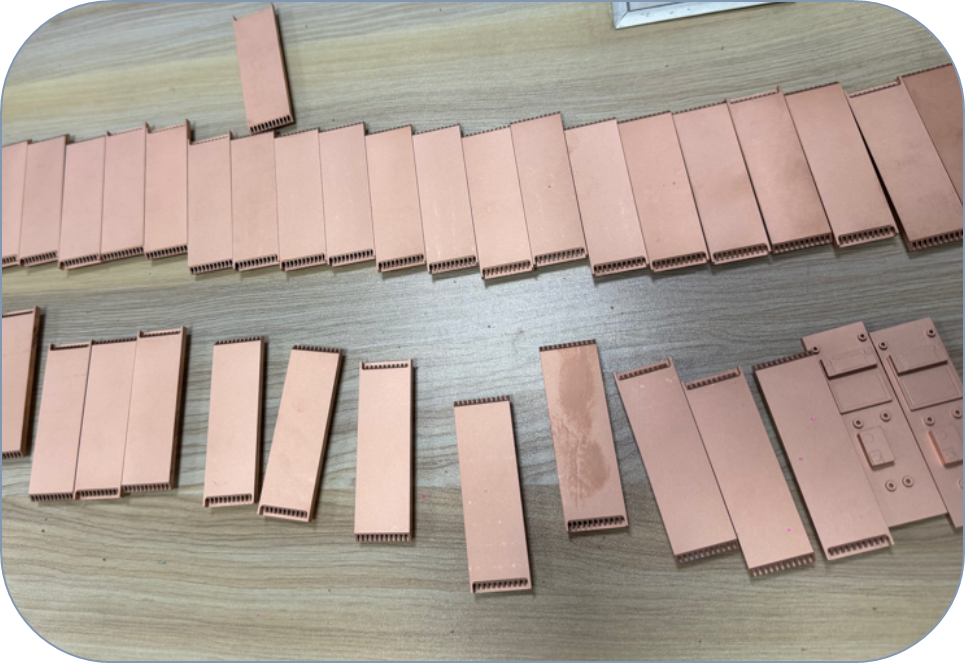 Copper provides superior heat spreading for high heat flux applications
Compared with conventional aluminum heatsinks, copper offers significantly higher thermal conductivity.
| Material | Thermal Conductivity (W/m·K) |
|---|---|
| Copper C1100 | ~390–400 |
| Aluminum 6061 / 6063 | ~170–220 |
Copper provides nearly twice the thermal conductivity of aluminum, enabling heat to spread much faster from localized high-power heat sources across the entire heatsink surface.
For high-power optical transceivers, copper heatsinks can significantly reduce:
Hot spot temperatures
Thermal gradients
Contact thermal resistance
IC junction temperatures
resulting in improved system stability and long-term reliability.
Traditional optical transceiver heatsinks are commonly manufactured using:
Aluminum die casting
Aluminum extrusion
These solutions provide:
Lightweight structures
Lower manufacturing costs
Good scalability for mass production
However, aluminum heatsinks have limited thermal spreading capability and often struggle with localized hot spots in high heat flux applications.
Copper-based heatsinks are much more effective for:
High power density transceivers
Small-area heat sources
AI networking equipment
High-speed switches
Optical communication systems
where thermal performance is critical.
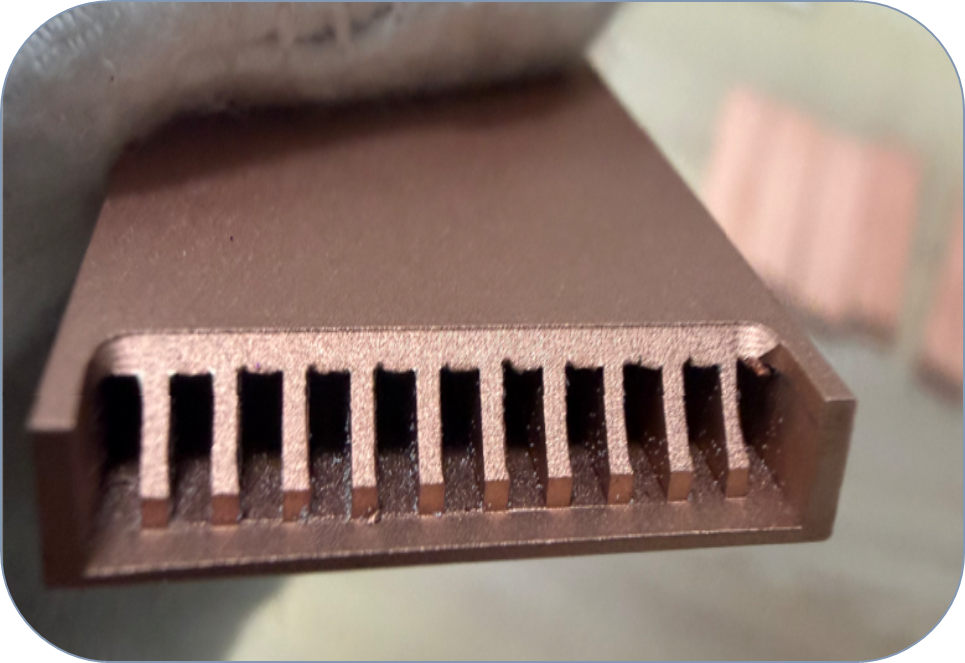 Copper-based heatsinks are effective for localized high-power heat sources
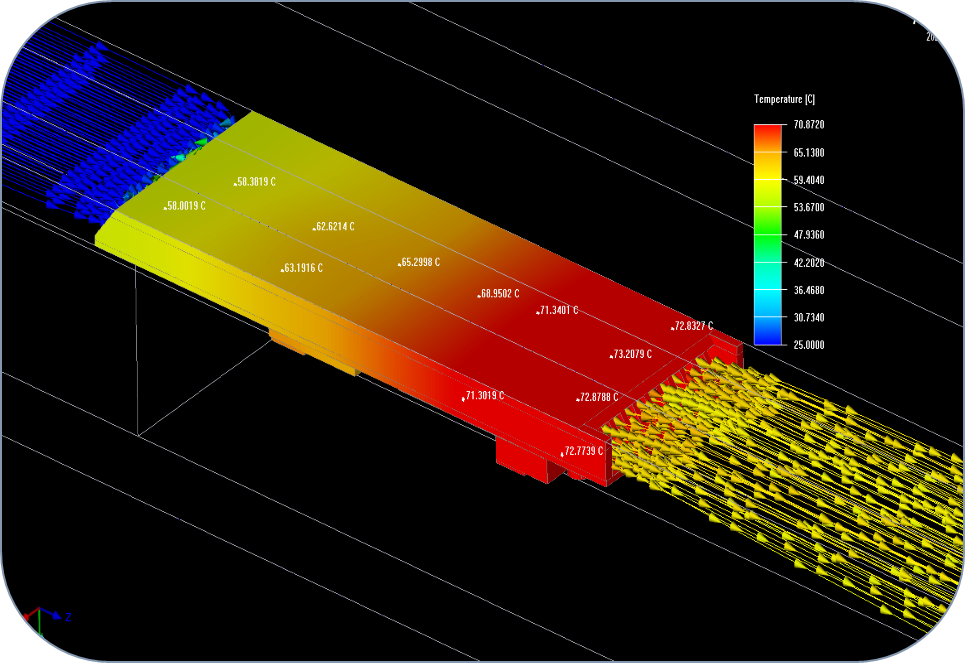 Advanced manufacturing processes enable thinner fins and lower thermal resistance
Because copper has a higher melting point and lower flowability after heating, it is difficult to manufacture complex copper profiles using conventional extrusion processes.
As a result, high-performance copper heatsinks are typically manufactured using advanced processes such as:
Precision CNC machining
Skiving technology
Forging processes
Stamped fin assemblies
Vapor Chamber integration
These manufacturing technologies enable:
Thinner fins
Higher fin density
More optimized airflow paths
Improved heat spreading
Lower thermal resistance
making them highly suitable for advanced optical transceiver cooling applications.
To further improve thermal spreading capability, we provide advanced Vapor Chamber (VC) cooling solutions for high-power optical modules.
A Vapor Chamber is a two-phase thermal device utilizing:
Vacuum chamber structures
Internal wick systems
Working fluid evaporation and condensation cycles
to rapidly spread heat across a larger surface area.
Compared with conventional solid metal heatsinks, Vapor Chambers provide:
Much higher effective thermal conductivity
Lower thermal resistance
Superior heat spreading performance
Improved temperature uniformity
making them ideal for:
QSFP-DD modules
OSFP modules
Co-Packaged Optics (CPO)
AI optical transceivers
High-speed networking systems
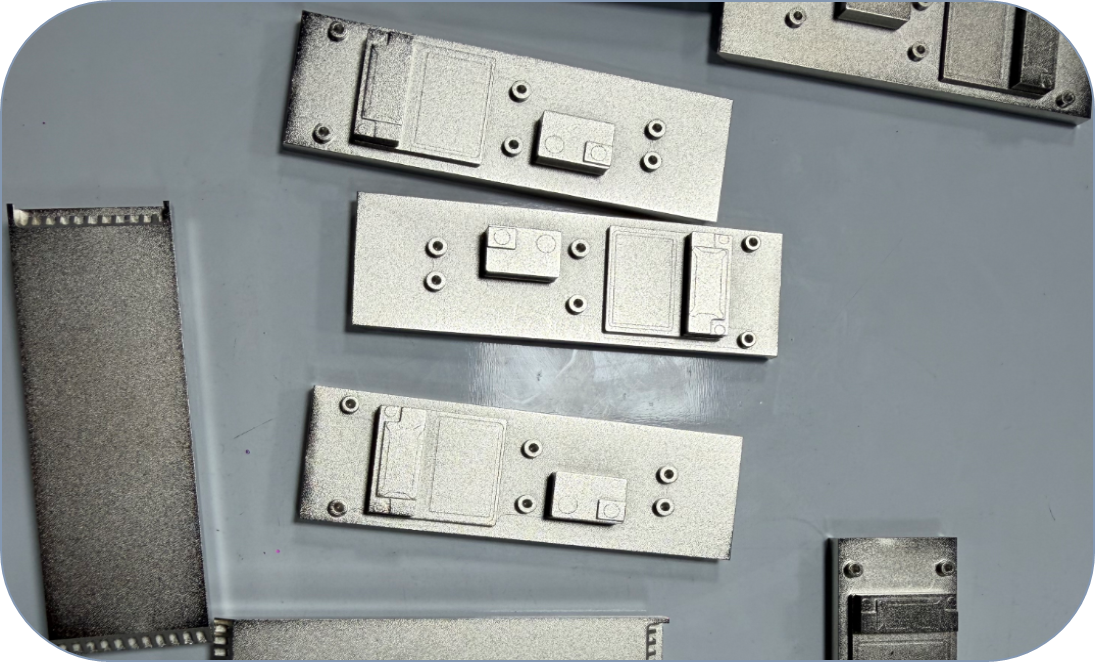

We provide multiple Vapor Chamber integration solutions, including:
Complete Vapor Chamber assemblies mounted directly above the transceiver housing for maximum thermal spreading capability.
Vapor Chambers soldered directly to the heatsink base to improve thermal transfer from concentrated heat sources.
Ultra-thin Vapor Chambers embedded directly inside the transceiver housing and in direct contact with the heat-generating components.
Verification testing shows that board-level integrated Vapor Chambers can improve thermal resistance by up to:
compared with traditional cooling methods.
Test Conditions:
Thermal Load: 30W
Airflow: 6 CFM
Verification testing demonstrates thermal resistance improvements of:
compared with conventional solid metal heatsinks.
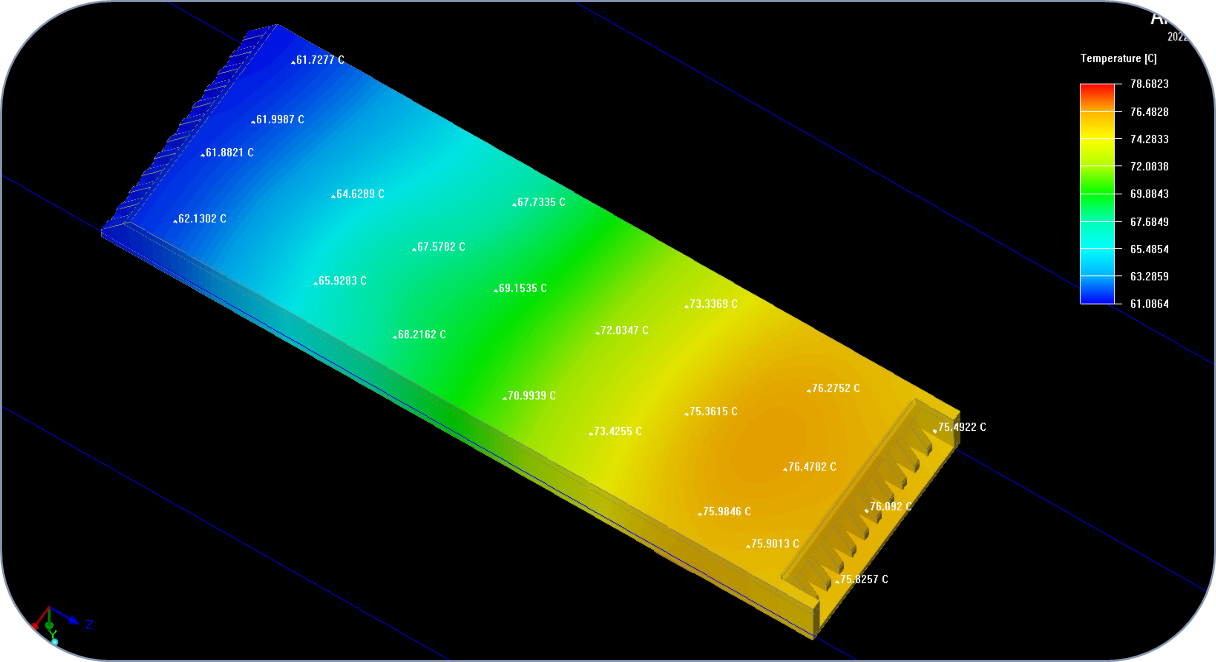 Vapor Chamber solutions improve thermal resistance for optical transceivers
| Item | Typical Specification | Application Benefit |
|---|---|---|
| Supported Thermal Load | 30W+ Optical Transceiver Cooling | Suitable for high-power QSFP-DD, OSFP and AI optical modules |
| Cooling Infrastructure | Compatible with existing air-cooled infrastructure | Reduces liquid cooling transition cost and system complexity |
| Thermal Resistance Improvement | Up to 25% for embedded board-level Vapor Chamber solutions | Improves thermal stability under 30W / 6 CFM test conditions |
| Ride-On Vapor Chamber Improvement | 20% – 35% | Reduces thermal resistance compared with conventional solid metal heatsinks |
| Material Options | Copper C1100, Aluminum 6061 / 6063 | Supports optimized balance between thermal performance, weight and cost |
| Manufacturing Options | CNC machining, skiving, forging, stamped fins, Vapor Chamber integration | Enables customized low-profile and high-density cooling designs |

Supports:
while remaining compatible with existing air-cooled infrastructure.
The combination of copper’s superior thermal conductivity and Vapor Chamber heat spreading technology effectively reduces:
Hot spot temperatures
Junction temperatures
Thermal resistance
improving long-term system reliability.
Our solutions allow customers to continue using existing air-cooled systems without transitioning to expensive liquid cooling infrastructure.
This helps reduce:
Infrastructure upgrade costs
System complexity
Operational maintenance requirements
Ideal for:
High-density servers
AI data centers
High-speed switches
Advanced networking systems
where thermal performance must be achieved within extremely limited space.
AI Data Centers
QSFP / QSFP-DD / OSFP Modules
High-Speed Switches
Co-Packaged Optics (CPO)
Cloud Computing Servers
Telecommunications Equipment
High-Speed Networking Systems


Renxin Thermal Products specializes in advanced thermal management solutions and provides:
CFD thermal simulation capabilities
Precision CNC machining
Vapor Chamber design and manufacturing
Skived heatsink manufacturing
Copper heatsink solutions
Thermal testing and reliability validation
We support customers with:
Custom thermal design
Thermal simulation analysis
Rapid prototyping
Low-volume engineering builds
Mass production support
delivering reliable, high-performance, and manufacturable thermal solutions for next-generation optical communication systems.
Share your optical module type, heat load, airflow condition, available space, material preference, and target thermal resistance. Our engineering team can support customized copper heatsink and Vapor Chamber cooling solutions for your application.
Request a Quote